In-flight Food Ordering
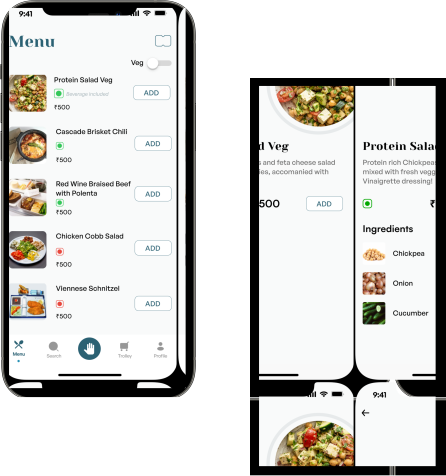
An app to help passengers order food inside a plane
Problem Statement
Help flight passengers place in-flight food orders for immediate consumption through a mobile app — making the dining experience seamless at 35,000 feet.
Why This Matters
The current in-flight catering global market is valued at $8.5 billion. In 2017 alone, 1.14 million tonnes of food was wasted from in-flight catering — a staggering figure that highlights the need for smarter ordering systems.
Understanding the Goal
An aeroplane carries people from various cultures, languages, and regions — each with different dietary restrictions and preferences. It is a significant challenge for cabin crew to cater to every passenger individually.
A food ordering app reduces aisle congestion, avoids awkward conversations between crew and passengers, and helps airlines analyze eating patterns to optimize their catering operations.
Defining the Audience
- — Geography — Global audience requiring internationalization and multi-language support
- — Culture — Different faiths and dietary needs (halal, kosher, vegetarian, vegan)
- — Medical conditions — Users with allergies and specific dietary restrictions
- — Age — Passengers ranging from 1 to 80 years old with varying tech comfort levels
Context & Needs
Passengers are already onboard when they use the app. Currently, ordering food is a hassle — call the crew, wait for them to reach your seat, place the order, then anxiously wait for delivery.
The app provides a quick, self-service ordering experience without requiring crew assistance, giving passengers control over their dining experience.
Solution — User Story (Ravi)
Ravi's 11-step user journey illustrates the complete experience:
Deliverables
- — Task flows
- — User flows
- — Information architecture
- — Hi-fidelity wireframes
- — Figma prototype
# In-flight Food Ordering
> An app to help passengers order food inside a plane

- Role: Product Designer
- Type: Mobile App
- Timeline: Case Study

## Problem Statement

Help flight passengers place in-flight food orders for immediate consumption through a mobile app — making the dining experience seamless at 35,000 feet.

## Why This Matters

> The current in-flight catering global market is valued at $8.5 billion. In 2017 alone, 1.14 million tonnes of food was wasted from in-flight catering — a staggering figure that highlights the need for smarter ordering systems.

## Understanding the Goal

An aeroplane carries people from various cultures, languages, and regions — each with different dietary restrictions and preferences. It is a significant challenge for cabin crew to cater to every passenger individually.

A food ordering app reduces aisle congestion, avoids awkward conversations between crew and passengers, and helps airlines analyze eating patterns to optimize their catering operations.

## Defining the Audience

- Geography - Global audience requiring internationalization and multi-language support
- Culture - Different faiths and dietary needs (halal, kosher, vegetarian, vegan)
- Medical conditions - Users with allergies and specific dietary restrictions
- Age - Passengers ranging from 1 to 80 years old with varying tech comfort levels

## Context & Needs

Passengers are already onboard when they use the app. Currently, ordering food is a hassle — call the crew, wait for them to reach your seat, place the order, then anxiously wait for delivery.

The app provides a quick, self-service ordering experience without requiring crew assistance, giving passengers control over their dining experience.

## Solution — User Story (Ravi)

Ravi's 11-step user journey illustrates the complete experience:

- Download app -> Board flight -> Connect to Wi-Fi -> Open app -> Enter seat number -> Browse menu -> Set preferences -> Select items -> Place order -> Receive food -> Great dining experience

## Deliverables

- Task flows
- User flows
- Information architecture
- Hi-fidelity wireframes
- [Figma prototype](https://www.figma.com/proto/218341FDZu0xg8SkEkbVfr/In-flight-food-ordering-app?page-id=0%3A1&node-id=1-1980&viewport=780%2C737%2C0.16&scaling=scale-down&starting-point-node-id=1%3A1974)